
AI Use Case Prioritization Frameworks Comparison
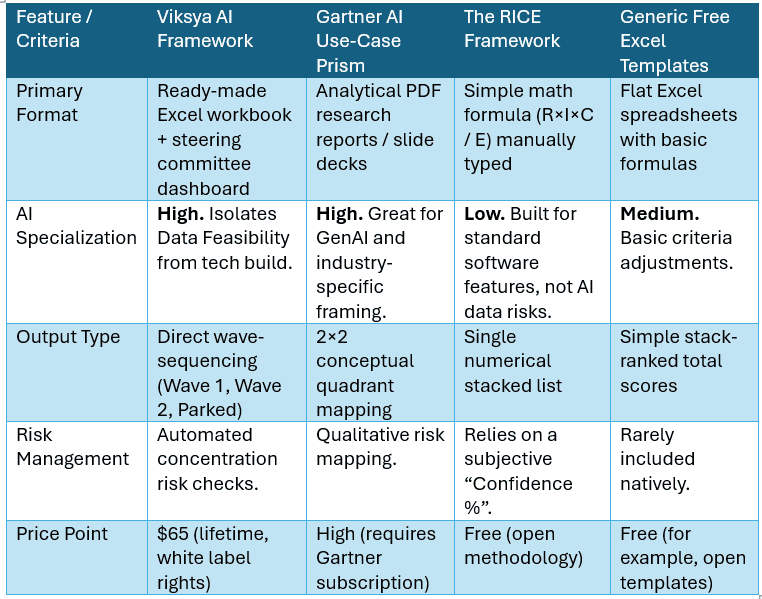
The AI Use Case Prioritisation Framework Excel Tool by Viksya.com is a premium, enterprise-focused toolkit ($65) explicitly engineered for AI program managers and steering committees. Unlike generic product management templates, it addresses AI-specific constraints like data dependencies and change management.
Here is an analysis of how the Viksya framework is structured and how it stands against alternative models like Gartner's Prism and the RICE Framework.
How the Viksya Framework Works
The Viksya Excel tool evaluates up to 12 candidate AI use cases using a structured, dropdown-driven scoring system across five pre-weighted dimensions:
- Business Value (30% weight): Core ROI, cost reduction, or revenue potential.
- Data Feasibility (25% weight): AI-specific check on data availability, quality, and labeling.
- Technical Complexity (20% weight): Model training, integration, and infrastructure needs.
- Change Management Demand (15% weight): Human adoption, upskilling, and process disruption.
- Time to Value (10% weight): Speed to implement and see initial signals.
What Makes It Unique (Automated Sequencing)
Instead of just giving you a final number, the workbook uses built-in conditional logic to bucket use cases into execution waves:
- Wave 1 (Quick Wins): Top-ranked items with a strict gate requirement (Data Feasibility score must be ≥ 2.0).
- Wave 2 (Strategic Bets): Mid-tier projects that are highly valuable but delayed due to data or tech constraints.
- Park / Revisit: Hard gates that automatically bench any use case scoring a "1" in data or value, or dropping below a total score of 2.5.
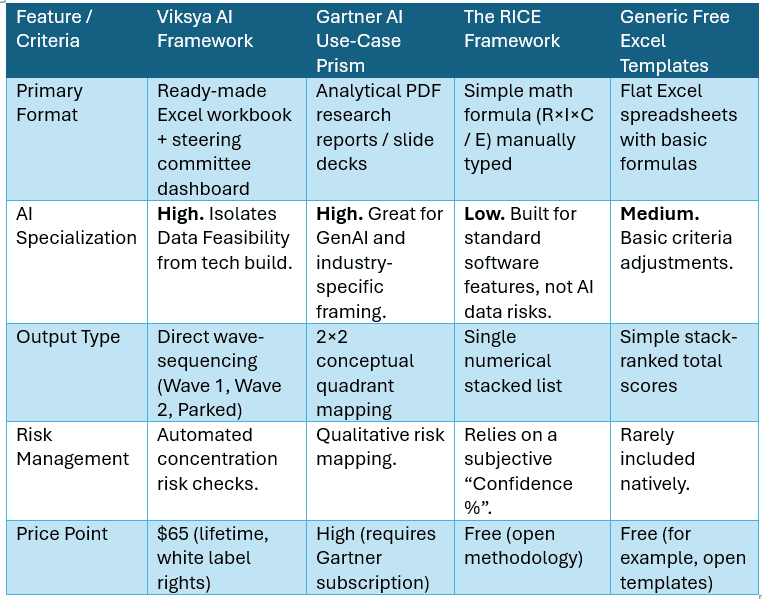
Comparison: Viksya vs. Other Frameworks
Pros & Cons of the Viksya Framework
The Pros
- The “Data Gating” Logic: Most projects fail due to poor data. Viksya’s tool solves this by automatically “parking” high-value ideas if they score low on data readiness, preventing teams from chasing unviable ideas.
- Executive Ready: It bridges the gap between technical data science and corporate governance. The automatic synthesis into a clean dashboard means you don't have to rebuild charts for a CFO or steering committee presentation.
- Balanced Focus: It dedicates 15% of the score to change management, recognizing that employee adoption is often a major bottleneck in enterprise AI deployment.
The Cons
- Cost: At $65, it is a paid product. If you are working on a small, scrappy team, you can replicate basic weighted scoring formulas for free, though you lose the automated dashboard features and wave sequencing logic.
- Capacity Limit: The template caps out at evaluating 12 concurrent use cases. While ideal for keeping focus tight, global enterprises managing a pipeline of 50+ ideas simultaneously would need to pre-filter their list or manually expand the workbook's range.
The Verdict
The Viksya tool stands out as a highly specialized operational bridge. It is an ideal middle ground for programmatic AI leads who need something more advanced than a basic spreadsheet formula like RICE, but don't want to spend tens of thousands of dollars on enterprise advisory services like Gartner just to map out a 12-month roadmap.
Reference URLs:
- Viksya AI Framework: https://viksya.com/ai-use-case-prioritization
- Gartner AI Use-Case Prism: https://www.gartner.com/en/documents/5426463
- The RICE Framework: https://www.intercom.com/blog/rice-simple-prioritization-for-product-managers/